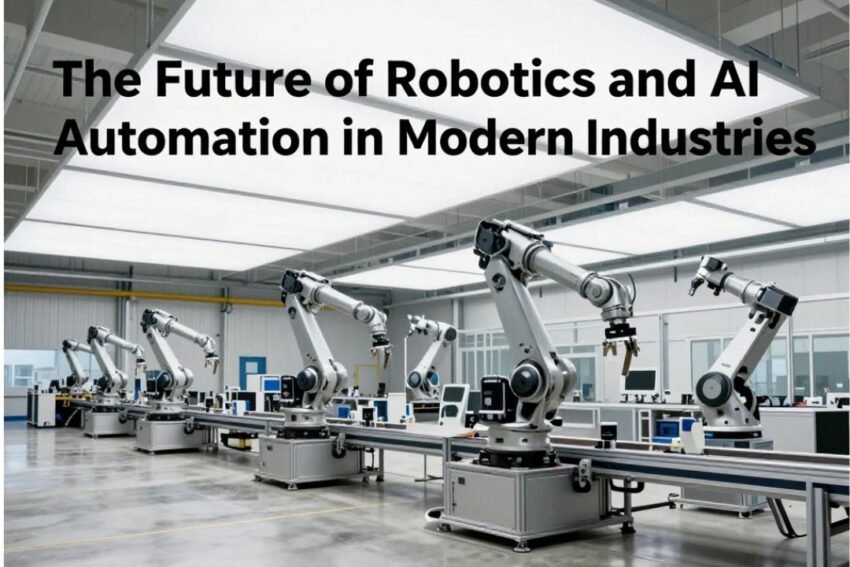
In 2026, the fusion of robotics and Artificial Intelligence (AI) is redefining how industries operate, compete, and innovate. What was once limited to factory assembly lines has now expanded into healthcare, logistics, agriculture, retail, and even creative fields.
Robotics powered by AI is no longer just about machines performing repetitive tasks—it’s about intelligent systems that can learn, adapt, and make decisions in real time. This transformation is shaping the future of modern industries at an unprecedented pace.
This SEO-optimized, human-written guide explores how robotics and AI automation are evolving and what businesses can expect in the coming years.
🤖 Understanding Robotics and AI Automation
Robotics refers to machines designed to perform tasks automatically, while AI enables those machines to think, learn, and improve over time.
When combined, they create smart robotic systems capable of:
- Recognizing patterns
- Making decisions
- Interacting with humans
- Adapting to changing environments
👉 In simple terms: Robotics provides the body, and AI provides the brain.
🚀 Why Robotics and AI Are Booming in 2026
Several factors are driving rapid adoption across industries:
- Labor shortages in key sectors
- Rising operational costs
- Demand for speed and efficiency
- Advances in machine learning and sensors
- Growth of cloud and edge computing
Companies are increasingly investing in automation to stay competitive and future-ready.
🏭 1. Smart Manufacturing & Industry 4.0
Manufacturing is at the heart of robotics innovation.
Key Developments:
- AI-powered robotic arms for precision tasks
- Predictive maintenance using sensors
- Fully automated production lines
Real-World Impact:
Factories are becoming “smart factories” where machines communicate with each other, reducing downtime and improving efficiency.
👉 Result: Faster production, fewer errors, and lower costs.
🚚 2. Logistics & Supply Chain Automation
Robotics and AI are transforming logistics and supply chains.
Innovations:
- Autonomous warehouse robots
- AI-driven inventory management
- Route optimization systems
Companies Leading the Way:
- Amazon
- DHL
These companies use robots to sort packages, manage warehouses, and deliver goods faster.
👉 Result: Faster deliveries and reduced operational costs.
🏥 3. Healthcare Robotics
Healthcare is experiencing a revolution with AI-powered robotics.
Applications:
- Robotic-assisted surgeries
- Patient monitoring robots
- Automated diagnostics
Benefits:
- Increased precision in surgeries
- Reduced human error
- Improved patient care
👉 Robots are assisting—not replacing—medical professionals, enhancing their capabilities.
🌾 4. Agriculture Automation (AgriTech)
Farming is becoming smarter with robotics and AI.
Key Technologies:
- Autonomous tractors
- Crop-monitoring drones
- AI-powered irrigation systems
Benefits:
- Higher crop yields
- Reduced water usage
- Efficient resource management
👉 Result: Sustainable farming with improved productivity.
🛍️ 5. Retail & Customer Experience
Retail businesses are using robotics and AI to enhance customer experiences.
Innovations:
- AI-powered recommendation systems
- Automated checkout systems
- In-store service robots
Example:
- Walmart uses automation for inventory tracking and customer service.
👉 Result: Faster shopping experiences and personalized services.
🚗 6. Autonomous Vehicles & Transportation
Self-driving technology is advancing rapidly.
Applications:
- Autonomous delivery robots
- Self-driving cars
- AI-powered traffic systems
Benefits:
- Reduced accidents
- Efficient transportation
- Lower fuel consumption
👉 Transportation is becoming safer and smarter.
🧑💼 7. Workplace Automation & AI Robots
Robots are entering offices and service industries.
Examples:
- AI customer support bots
- Robotic assistants in hotels
- Automated HR systems
👉 These systems act as digital coworkers, handling repetitive tasks while humans focus on strategy and creativity.
⚙️ 8. Collaborative Robots (Cobots)
One of the biggest trends in 2026 is the rise of collaborative robots, or cobots.
What Makes Cobots Unique:
- Work alongside humans
- Easy to program
- Safe and flexible
Use Cases:
- Assembly lines
- Packaging
- Quality control
👉 Result: Increased productivity without replacing human workers.
🔐 9. AI-Powered Security & Surveillance
Robotics and AI are enhancing security systems.
Capabilities:
- Facial recognition
- Behavior analysis
- Autonomous security patrol robots
👉 Result: Improved safety and faster threat detection.
🌐 10. Integration with IoT and Edge Computing
Robotics is becoming more powerful through integration with:
- Internet of Things (IoT)
- Edge computing
- Cloud platforms
👉 This allows robots to process data in real time and operate more efficiently.
📊 Benefits of Robotics and AI Automation
1. Increased Efficiency
Machines can work 24/7 without fatigue.
2. Cost Reduction
Automation reduces labor and operational costs.
3. Improved Accuracy
Robots perform tasks with high precision.
4. Scalability
Businesses can scale operations easily.
5. Enhanced Safety
Robots can handle dangerous tasks.
⚠️ Challenges and Concerns
Despite its advantages, this transformation comes with challenges:
Job Displacement
Some roles may become obsolete, requiring reskilling.
High Initial Costs
Implementing robotics can be expensive.
Technical Complexity
Integration with existing systems can be difficult.
Ethical Concerns
Issues around data usage and decision-making arise.
👉 Businesses must balance innovation with responsibility.
🔮 Future Trends in Robotics and AI Automation
Looking ahead, the future is even more exciting.
Key Trends:
- Fully autonomous robots
- Human-like AI assistants
- Expansion into small businesses
- AI-driven innovation across all industries
Companies like Tesla are already investing heavily in AI-powered robotics.
👉 The goal: create intelligent machines that can perform complex tasks independently.
🧩 How Businesses Can Prepare
To stay competitive, businesses should:
- Start small with automation projects
- Invest in employee training
- Choose scalable technologies
- Focus on real business problems
👉 The key is strategic adoption, not just technology adoption.
✅ Conclusion
The future of robotics and AI automation in modern industries is transformative and full of opportunity. From manufacturing and healthcare to retail and transportation, intelligent machines are reshaping how work gets done.
While challenges exist, the benefits far outweigh the risks for businesses that adopt these technologies wisely.
In 2026 and beyond, robotics and AI will not replace humans—they will empower them, creating a smarter, faster, and more efficient world.